
Quick answer
The chlorine taste in tap water is normal and not dangerous — it's the residual of municipal treatment. Get rid of it with: (1) letting it rest 2 hours uncapped, (2) boiling 5 min, (3) activated carbon filter (jug, bottle or tap). Filter is the practical solution for daily use.
Almost everyone in Europe has drunk tap water that tastes like a swimming pool. That taste has a technical name — chlorination by-products — and it's more common than we think. The good news is that it's fixed cheap and quick. The bad news is that supermarket solutions don't always work as promised.
Why tap water tastes like chlorine
Spanish regulation (RD 3/2023) requires that drinking water reach homes with between 0.2 and 1.0 mg/L of free residual chlorine. This chlorine isn't there for flavour — it's there to guarantee microbiological safety throughout the journey from the treatment plant to your tap, which can be kilometres through old pipes.
Three reasons we perceive more or less chlorine:
- Distance from treatment plant. Buildings farther away get water with more chlorine to compensate for dissipation.
- Season. In summer, higher temperatures favour bacterial growth, so municipalities raise the chlorine dose.
- Pipe state. Old galvanised iron pipes add rust and compounds that alter taste.
Is it dangerous? Chlorine at those doses poses no risk. WHO allows up to 5 mg/L. But it's unpleasant and also alters the taste of tea, coffee and food cooked with water. That does impact quality of life.
The 5 methods ranked by effectiveness
1. Activated carbon filter (jug, bottle or tap) — ✅ best option
Activated carbon absorbs chlorine and its by-products by adsorption. Also removes sediment, iron, bad odours. Doesn't change pH nor remove beneficial minerals (calcium, magnesium).
Cost: Brita jugs ~€30, filter bottles €40-60, tap filters ~€50. Cartridges last 2-3 months.
Advantage: water ready instantly, no wait. Ideal for office, home or to bring on hikes.
2. Let it rest uncapped — ✅ free but slow
Free chlorine is volatile: leaving an open jug in the fridge for 2-4 hours evaporates most of it. In 12 hours almost none is left.
Cost: €0.
Con: requires planning. If you want water fast, no good. And doesn't remove sediment or other compounds.
3. Boil — ⚠️ useful but changes taste
Boiling 5 minutes removes chlorine and bacteria. But it also concentrates minerals(makes it "harder") and oxidises iron (yellow tint). Taste changes noticeably.
When to use: for coffee or tea, no change; for drinking in a glass, better to filter or let rest.
4. Domestic reverse osmosis — ⚠️ expensive and aggressive
System installed under the sink that removes 95-99% of everything: chlorine, salts, minerals, contaminants. Maximum purity solution, but also removes calcium and magnesium that are beneficial, and generates 3-4 litres of rejected water for every litre filtered.
Cost: €200-500 install + maintenance.
When it makes sense: hard-water zones with scale problems, or if you need ultra-pure water for medical reasons.
5. Buy bottled water — ❌ the worst system
1,500 plastic bottles per family per year. €200-300 spent. And it's not as pure as we think — many mineral waters spend months in PET bottles exposed to sun in trucks.
Filter brands that work (tested)
For home or office
- Brita Marella XL 3.5 L — ~€30. Classic, MaxTella Pro cartridge 4 weeks. Reduces chlorine, improves taste.
- Bwt AquaLizer — ~€40. Adds magnesium beyond filter. Noticeably better taste.
- Xiaomi Mi Water Purifier 800G — ~€350. Compact reverse osmosis if you need total purity.
For carrying / mobile use
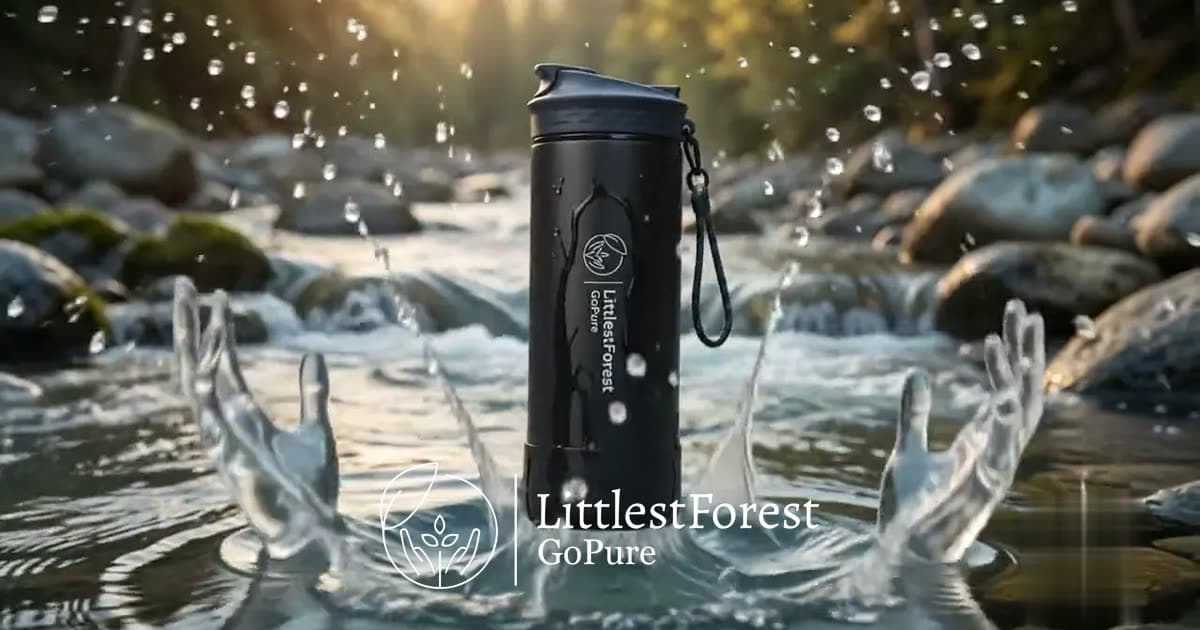
- GoPure by LittlestForest — €59.99. Filter bottle 0.2 μm + activated carbon. Lifetime 1,500 L. For home, travel and outdoors.
- LifeStraw Go 2.0 — ~€40. Membrane only, no carbon. Filters bacteria but lets chlorine taste through.
For installing on the tap
- Brita On Tap tap filter — ~€50. Easy install, filters up to 1,200 L.
When it's more than chlorine and you need to go further
If your tap water:
- Tastes metallic = probable iron / lead excess, check building pipes
- Smells like rotten eggs = hydrogen sulphide, typical in well water, needs specific filter
- Looks cloudy or has particles = sediment, install a 5 μm prefilter
- Has persistent chemical smell that isn't chlorine = report to municipality and don't drink until they confirm potable
For 90% of cases in Europe, an activated carbon filter solves the problem. Remaining cases are exceptional and deserve a specific analysis.
The simple math
An average Spanish family buys ~20 packs of 6 bottles a year, about €220. A Brita-type filter costs €30 + €40 of cartridges per year.Savings: €150/year. And 1,500 fewer plastic bottles in the landfill.
If you also travel or do outdoors, the filter bottle gives you double use: home + travel. There compound savings can reach €300/year.
Chlorine taste has a simple solution. The only reason to keep putting up with it or paying for bottled is that no one explained it properly.